

travel · 4 min read
Trincomalee and Nilaveli: Harbour, Temples and East-Coast Sea
Trincomalee is more than a beach base: a deep natural harbour, an active pilgrimage city and the gateway to some of the east coast's clearest water.
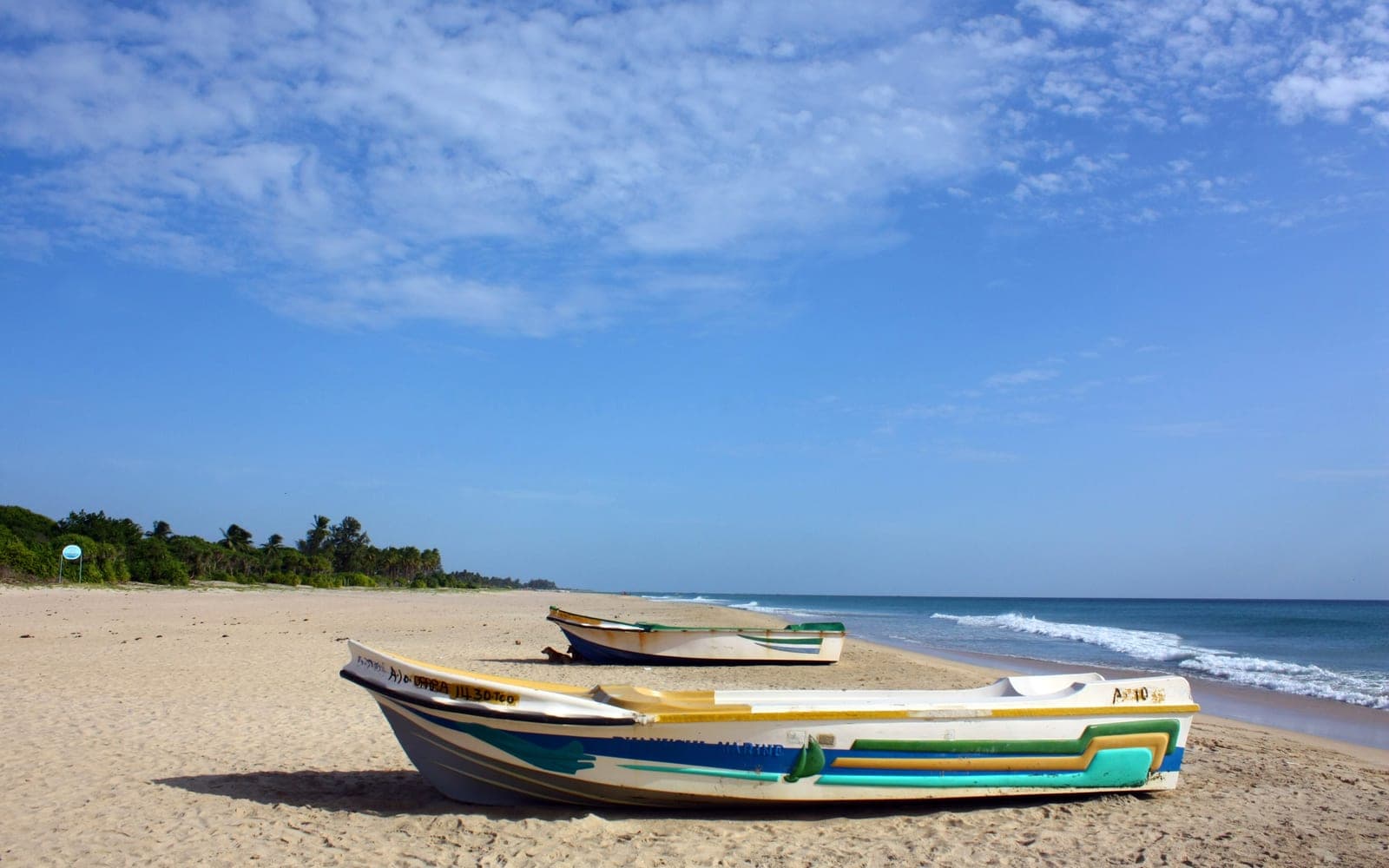
Trincomalee is often sold as a strip of east-coast beach, but the city makes more sense when you begin with its harbour. The enormous protected bay has shaped trade, conflict, naval strategy and daily work for centuries. Around it sit Hindu, Buddhist, Muslim and Christian communities, colonial fortifications, fishing neighbourhoods and the beach settlements of Uppuveli and Nilaveli.
That combination is why Trincomalee works for both a weekend and a longer east-coast stay. You can spend one morning at a sacred cliff-top temple, another in the water, and an evening eating seafood in a neighbourhood that is still a town rather than a sealed resort.
Koneswaram and Fort Frederick
The road to Koneswaram Kovil passes through Fort Frederick, originally built by the Portuguese and later held and altered by other colonial powers. The fort remains an active military area as well as a public route, so obey signs, do not photograph restricted areas and avoid wandering beyond open paths.
Koneswaram stands on Swami Rock above the sea and is one of Sri Lanka's major Shiva temples. Approach it as a place of worship: remove shoes where directed, cover shoulders and knees, and ask before photographing ceremonies or people. The sea view is extraordinary, but the temple is not a viewing platform with decoration attached.
Go earlier in the day for cooler walking and allow time for the town below. Trincomalee's mix of kovils, churches, mosques, food shops and harbour streets is the story; the cliff is only one chapter.
Uppuveli or Nilaveli?
Uppuveli is closer to town and generally has a denser mix of guest houses, restaurants and dive operators. It is convenient if you want to combine city visits and beach time without long transfers.
Nilaveli, farther north, has a longer, quieter sweep of sand and is the usual jumping-off point for Pigeon Island. Development and sea conditions change along both beaches, so choose accommodation by the exact stretch and recent reviews, not the town name alone.
The east coast's calmer-water season broadly falls in the middle part of the year, opposite the popular south-coast window. That is a planning pattern, not a guarantee. Wind, rain and currents can change within a week; ask locally before swimming, snorkelling or committing to a boat.
Pigeon Island without damaging what you came to see
Pigeon Island National Park protects shallow reef habitat offshore from Nilaveli. Its accessibility is also its pressure point. Choose an operator who provides a clear safety briefing, carries flotation equipment, limits physical contact with coral and does not encourage feeding or chasing wildlife.
Do not stand on coral, even in shallow water. Reef structures are living and easily broken, and fins can do damage before a swimmer notices. Use well-fitted equipment, keep distance from animals and follow park and operator instructions. If conditions are poor or the site is crowded, a responsible operator should be willing to change the plan.
Diving, whales and boat claims
Trincomalee supports seasonal diving and whale-watching, but sightings and visibility are never guaranteed. Ask operators what happens if weather cancels a trip, how many passengers they carry, what qualifications the guides hold and how they manage distance from whales. A promise of guaranteed wildlife is a warning sign, not a benefit.
For diving, discuss certification, recent conditions, equipment checks and the actual site before paying. Beginners need a plan matched to their training rather than the most photogenic wreck or reef advertised on a board.
Food and the local economy
Look beyond hotel menus for Tamil home-style rice and curry, seafood, dosai, short eats and fresh fruit drinks. Small restaurants may close when a day's food is sold, and service can move at the pace of cooking rather than a resort timetable. That is part of buying locally, not a service failure.
Use licensed local guides and boat operators, buy from neighbourhood shops, and ask accommodation staff who actually runs an experience. Spending a little more with a safe operator who employs locally is better value than chasing the cheapest boat at the beach entrance.
A useful three-day plan
- Day one: Fort Frederick, Koneswaram, the harbour-facing city and an evening meal in town.
- Day two: Nilaveli or Uppuveli, with a boat or dive trip only if conditions and operator standards are good.
- Day three: a slower beach morning, local food and time for the return journey rather than another rushed excursion.
Check Sri Lanka Tourism's Trincomalee overview for official destination context, then confirm live opening, transport and sea information directly before you travel.