

travel · 4 min read
Jaffna and the Northern Peninsula: A Practical Guide
Jaffna rewards travellers who slow down: living Hindu temples, island ferries, palmyrah country and one of Sri Lanka's most distinctive regional cuisines.
· Jaffna
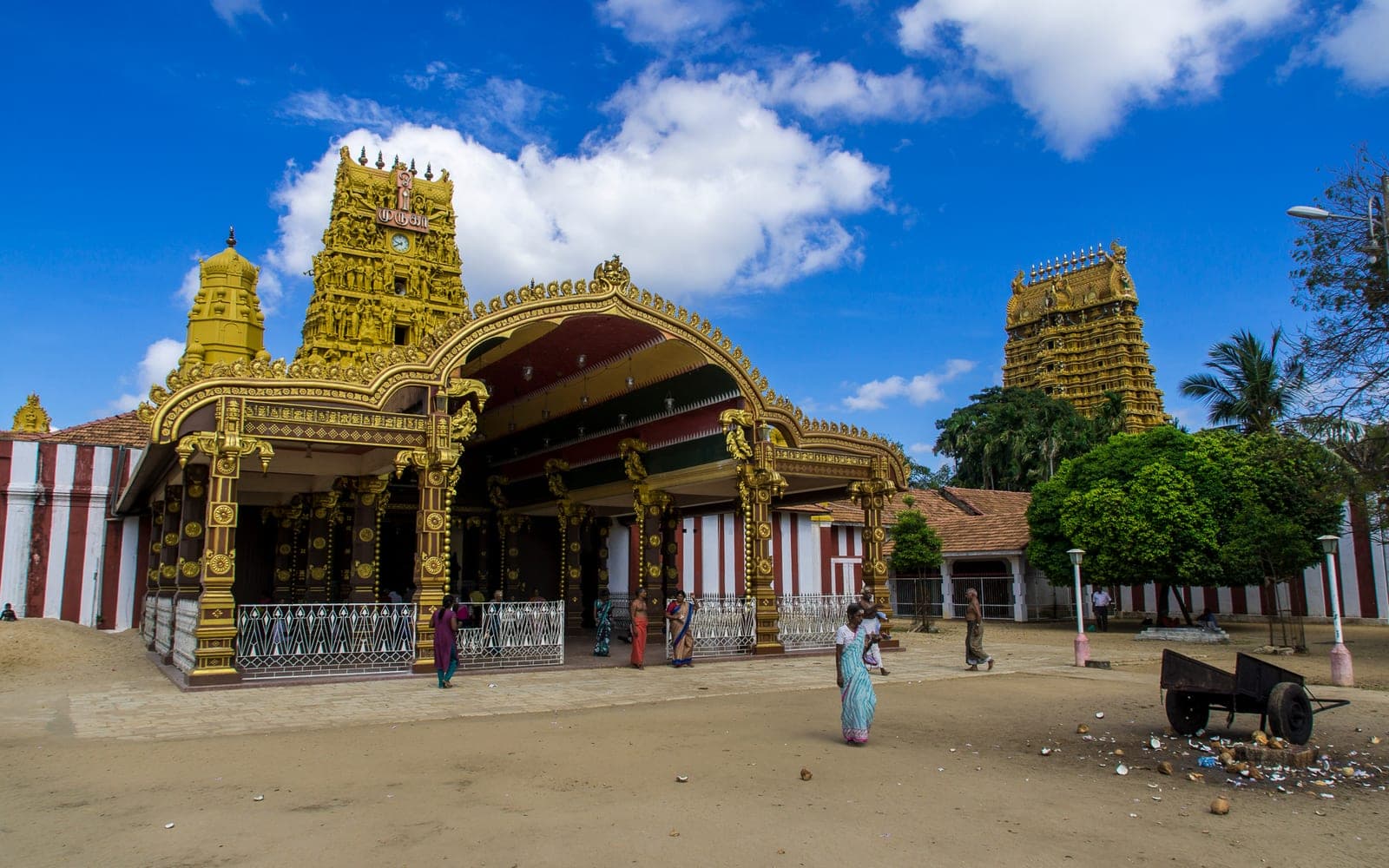
Jaffna feels different from the south before you have seen a single landmark. Tamil is the everyday language, palmyrah palms replace much of the coconut-heavy landscape, Hindu temples shape the rhythm of neighbourhood life, and the food has its own heat, seafood and sourness. The long journey north is not a detour from "classic" Sri Lanka. It is a visit to another essential part of the same island.
The best Jaffna trips leave room for ordinary places as well as famous ones: a vegetarian breakfast, a bicycle moving through a quiet lane, a market stall cutting fruit, or the evening crowd outside a temple. Two full days is a useful minimum. Three lets you add an island without turning every ferry and meal into a deadline.
Start with Jaffna town
Nallur Kandaswamy Kovil is the city's spiritual centre and a living place of worship, not a monument staged for visitors. Remove footwear before entering, dress modestly, follow any instructions at the entrance and avoid photographing worshippers without permission. Festival dates and access arrangements change each year, so check locally rather than relying on an old itinerary.
Jaffna Fort, on the lagoon, carries Portuguese and Dutch layers and gives the clearest physical sense of the city's colonial history. Nearby, the rebuilt Jaffna Public Library matters for reasons deeper than architecture: the destruction of its collection in 1981 remains part of the north's living memory. Visit quietly and resist reducing either place to a quick photograph.
The town market is the easiest introduction to northern produce. Look for palmyrah products, grapes, mangoes in season, dried seafood and spices. The point is not to collect a checklist; it is to notice what the region grows, preserves and cooks differently.
Eat like the region matters
Jaffna cuisine deserves more than one crab curry. Try odiyal kool, a thick seafood and palmyrah-tuber soup; dosai and idiyappam with northern-style sambols; mutton or seafood curries; and sweets made with palmyrah jaggery. Vegetarian restaurants around Nallur are particularly useful for breakfast and lunch.
Ask about spice if you need to, but do not assume every dish can be made mild at the last minute. Small kitchens often prepare a base curry for the day. Ordering what is already being served usually produces the best meal and the least waste.
Peninsula roads and island journeys
The peninsula opens beyond the city into wells, gardens, temples and long causeways. Point Pedro reaches the northern coast; Keerimalai combines a sacred bathing area with coastal scenery; and village roads show a quieter agricultural landscape than most visitors associate with Sri Lanka.
West of the city, causeways and ferries connect a chain of islands. Nainativu is important to both Hindu and Buddhist pilgrims, with major shrines serving each community. Treat the journey as pilgrimage infrastructure first and a visitor experience second: dress for sacred sites, give priority to older passengers and carry water without leaving plastic behind.
Delft is more remote and needs a full, flexible day. Ferry capacity, sea conditions and onward transport can change. Confirm the current sailing locally, start early and keep a backup plan rather than assuming an online timetable is a guarantee.
Getting there and moving around
Rail is a comfortable way to reach Jaffna when services suit your dates; long-distance buses provide more departures, while domestic flights may operate on selected schedules. Use the official Sri Lanka Railways schedule close to travel and verify the return journey as carefully as the outward one.
Within town, tuk-tuks are practical and bicycles work well for shorter distances in cooler hours. A car with a local driver makes peninsula loops easier, but agree on the route, waiting time and total price before leaving. Island ferries usually still require a tuk-tuk, bus or hired vehicle at one or both ends.
Weather and timing
The north is hot for much of the year and exposed on causeways and temple courtyards. Early starts, sun protection and more drinking water than you think you need make a real difference. The northeast monsoon can bring heavier rain and rougher sea conditions later in the year; shoulder periods vary, so check a current forecast rather than planning from a generic island-wide weather chart.
A balanced three-day outline
- Day one: Nallur, the market, Jaffna Fort, the library and a proper northern dinner.
- Day two: a peninsula loop through local towns, coastal stops and temples.
- Day three: Nainativu or Delft, chosen according to ferry conditions and how much travel you actually enjoy.
Leave one unscheduled meal and one unhurried evening. Jaffna's value is not only that it contains places to see; it is that the city gives visitors time to understand a part of Sri Lanka too often compressed into a single northern day.
For a broader official overview, read Sri Lanka Tourism's guide to the north.