

motors · 4 min read
Renting a Car, Tuk-tuk or Scooter in Sri Lanka: What to Check
A self-drive checklist covering licence validity, insurance, deposits, vehicle condition and the practical differences between cars, tuk-tuks and scooters.
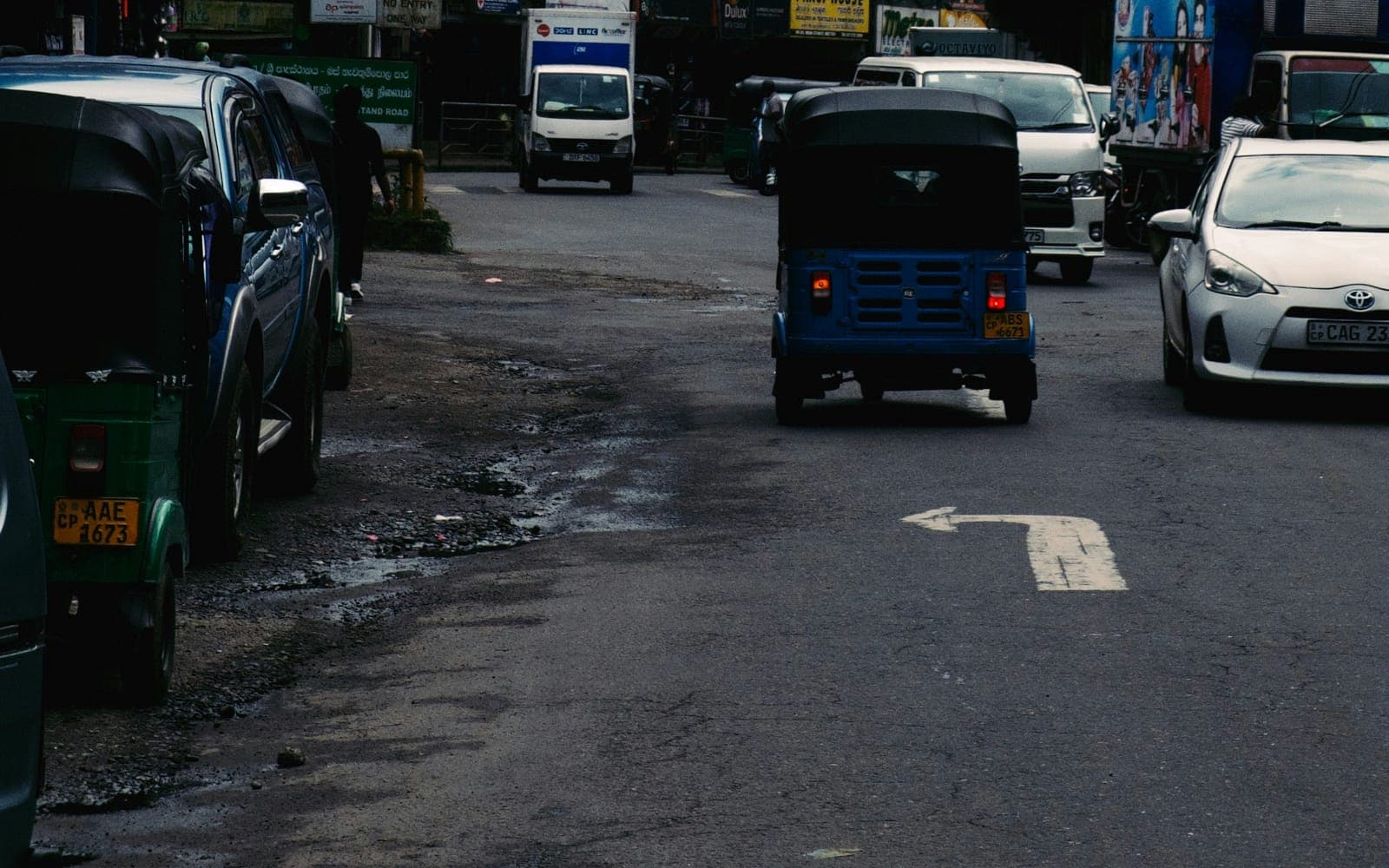
Self-driving changes a Sri Lanka trip. It makes small beaches, hill-country roads and rural stays much easier to reach, but it also makes you responsible for a vehicle, an unfamiliar road system and the exact licence class you are using.
Start by choosing the vehicle for the route rather than for the photograph.
Car, tuk-tuk or scooter?
A car gives weather protection, luggage security and the easiest long-distance day. It is the most comfortable choice for families and for routes that cross climates, but it is less convenient on narrow town streets and costs more to hire and fuel.
A tuk-tuk is slow, open and distinctly Sri Lankan. It works well for travellers with time, modest daily distances and light luggage. It is not a small car: braking, cornering, crosswinds and wet roads require adjustment, and long highway-style journeys are tiring.
A scooter or motorcycle is the easiest way to move around a beach town or a compact region. It also offers the least protection. Choose it only if you already ride confidently; a holiday is a poor setting in which to learn roadcraft.
Browse current vehicle rentals only after deciding which compromise fits your journey.
Confirm that your licence is valid
Do not assume a home-country licence automatically covers you. Sri Lanka Police states that a foreign driver must hold an accepted valid licence for the corresponding vehicle class: an international driving licence, a Sri Lankan licence, or a foreign licence with the required conversion certificate. Conversion certificates are available through the Department of Motor Traffic, including its airport facility.
Read the current Sri Lanka Police guidance for foreign drivers before collecting the vehicle. Requirements can change, and the rental provider's willingness to hand over keys is not proof that you are legal or insured.
Check the class carefully. Permission to drive a car does not automatically mean permission to operate a motorcycle or three-wheeler.
Read the insurance, not the sales sentence
“Fully insured” is incomplete. Ask for the policy or a written summary that answers:
- Who is permitted to drive
- Which vehicle classes and uses are covered
- The excess you pay after damage
- Whether tyres, glass, underbody and theft are excluded
- Whether unsealed roads or particular regions are excluded
- What happens after an accident and whom you must contact
- Whether roadside assistance and recovery are included
Confirm that your travel insurance covers self-driving the specific class. Many policies exclude motorcycles above a stated engine capacity or exclude riding without a home motorcycle licence.
Record the condition at collection
Walk around slowly and make one continuous video with the provider present. Capture every panel, wheel, tyre, light, mirror, seat and window, then the dashboard with the engine running.
Check:
- Brakes, steering, horn, indicators and lights
- Tyre tread and visible damage
- Wipers and washers
- Air conditioning in a car
- Helmets of the correct size for every rider
- Spare wheel or puncture equipment
- Registration, revenue, emissions and insurance documents
- Fuel level and odometer
Send the photographs or video to the provider so the timestamp and shared record are clear.
Understand the deposit and agreement
The agreement should state the rental dates, total price, mileage allowance, fuel policy, deposit, damage process, authorised drivers and return conditions. Ask when and how the deposit will be returned and what evidence is required if the provider makes a deduction.
Never surrender your passport as a casual security deposit. A provider may need identification details, but you need the original document for travel.
Drive for Sri Lankan conditions
Traffic keeps left. Buses stop and pull out frequently, motorcycles filter through small gaps, dogs and pedestrians use the road, and an apparently short hill-country distance can take hours. Avoid building an itinerary around maximum daily kilometres.
Rain changes visibility and grip quickly. Slow down before—not during—a flooded section or sharp bend. Avoid night riding on two wheels where possible, and never treat another driver's risky overtake as an instruction to move faster.
At return
Refuel according to the agreement, photograph the vehicle again, obtain a written acknowledgement of its condition, and keep the rental documents until the deposit has been returned. The most enjoyable self-drive rental is the one that ends without an argument about a scratch neither side can date.