travel · 3 min read
Sri Lanka's Festivals and the Buddhist Calendar
Vesak lanterns, the Kandy Esala Perahera, and a monthly full moon holiday most visitors never notice until they hit a closed bar. Here's the rhythm of the Sri Lankan calendar.
Sri Lanka's public calendar runs on a mix of the Buddhist lunar cycle, Hindu, Muslim and Christian festivals, and the country's multi-religious make-up means most months carry at least one major observance for someone.
Poya days — the monthly rhythm
Every full moon is a Poya day, a Buddhist public holiday observed nationwide, and it's the single most common thing a first-time visitor gets caught out by: alcohol sales are restricted or banned on Poya days, many shops close early or stay shut, and some transport and business hours shift. It's worth checking the date before planning a night out, not after.
Vesak — the most important Buddhist festival
Vesak, on the Poya of the month of Vesak (usually May), marks the Buddha's birth, enlightenment and death, all traditionally held to have occurred on the same full moon. Towns and cities are decorated with elaborate paper and electric-lit lanterns, and pandals — large illuminated structures depicting scenes from Buddhist stories — go up in public squares. Free food and drink stalls, known as dansal, are set up by ordinary households and businesses as an act of merit-making, open to anyone who walks past. It is the closest thing Sri Lanka has to a single nationwide festival, and one of the most striking times to be in a Sri Lankan city after dark.
The Kandy Esala Perahera
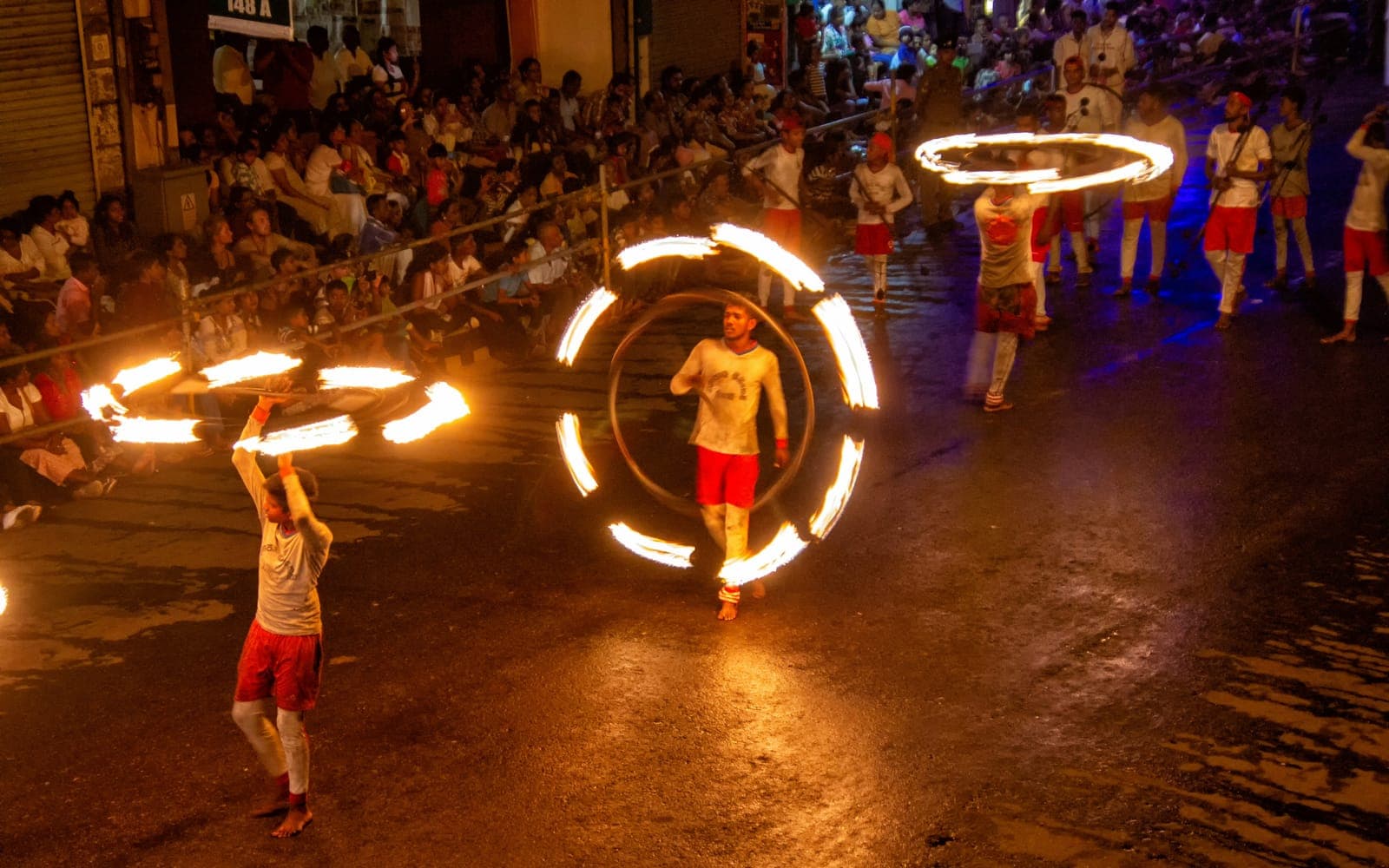
The Esala Perahera, held in Kandy over ten nights around the month of Esala (July or August), is the island's grandest procession: drummers, traditional dancers, fire performers and dozens of decorated elephants parade through the streets, honouring the sacred tooth relic of the Buddha kept at Kandy's Temple of the Tooth. It's a genuinely major event that draws visitors from across the island and abroad — accommodation in Kandy books out well ahead, and the final nights are the largest and most crowded.
Hindu, Muslim and Christian festivals
- Thai Pongal, a Tamil Hindu harvest festival in January, is marked with the ritual boiling of milk and rice and is significant in Jaffna and the plantation districts.
- Deepavali (Diwali), in October or November, is widely observed in Hindu communities with lamps and sweets.
- Ramadan and Eid follow the Islamic lunar calendar and shift roughly eleven days earlier each year; fasting hours during Ramadan affect meal timings and some restaurant hours in Muslim-majority areas.
- Christmas, marked by Sri Lanka's sizeable Catholic and Christian population, particularly along parts of the west coast, is a public holiday with visible church decoration and Christmas markets in Colombo and Negombo.
Sinhala and Tamil New Year
Aluth Avurudda / Puthandu, in mid-April, is the Sinhala and Tamil New Year, astrologically timed rather than fixed to a calendar date. It's a major domestic travel period — much of the country shuts down as people return to family villages for traditional games, specific foods, and rituals timed to an auspicious hour — which makes it a poor window for a first visit if you're relying on shops, restaurants and transport running normally, but a striking one if you have a local connection to experience it through.