

travel · 2 min read
The Kandy to Ella Train: What to Expect
Regularly called one of the great train journeys in the world, and for once the reputation is earned. Here's what the ride actually involves and how to get the most out of it.
· Ella
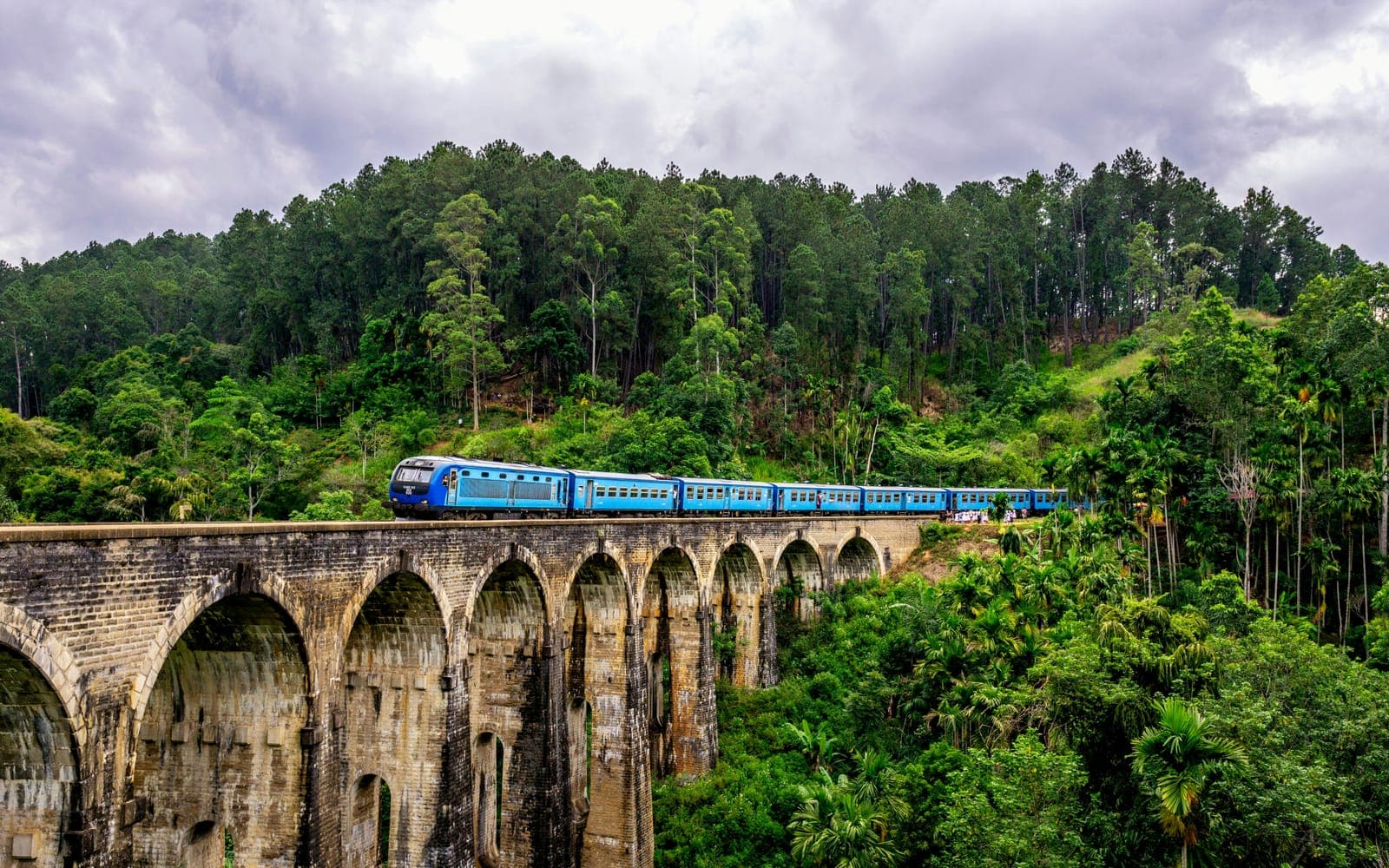
The railway line between Kandy and Ella, via Nanu Oya (for Nuwara Eliya) and Haputale, climbs from the hill country's outer edge to well over a thousand metres, then winds back down through tea estate after tea estate on the way into Ella. It was built by the British in the late 19th and early 20th centuries to move tea to the coast, following routes surveyed for the estates rather than for scenery — the views are, in a sense, a byproduct.
What the ride is actually like
The train winds through terraced tea gardens, eucalyptus forest, waterfalls visible from the carriage, and small hill-country stations that look largely unchanged since the colonial period. The single most photographed stretch is the approach to Ella, over the Nine Arch Bridge, a stone viaduct built without steel during a wartime materials shortage — a detail that gets asked about on the train more than almost anything else on the line.
The full run from Kandy to Ella takes the better part of a day; many travellers instead ride the shorter and equally scenic Nanu Oya to Ella or Nanu Oya to Haputale section, which covers the most dramatic tea-country scenery without committing an entire day to the rails.
Classes and seats
- First class observation carriages, on some services, have large windows and forward-facing seats and are the most comfortable way to do it, but run limited departures and sell out well ahead — book as early as you can.
- Second and third class are the ordinary experience most travellers actually have: wooden or vinyl seats, open doorways, and — provided you're sensible about it — the option to stand in the open doorway for the view and the breeze, which is as much a part of the trip's reputation as the scenery itself.
- Standing room and unreserved seating fill up fast in high season; arriving well before departure matters more than which class you've booked.
Safety in the doorway
Standing in an open carriage doorway is the classic photo and genuinely part of the experience, but it is also how injuries happen on this line — hold on properly, mind low bridges and trackside vegetation, and don't lean out further than the doorway itself. Staff generally don't stop passengers doing this; that isn't the same as it being risk-free.
Practical notes
Trains run to a published timetable but delays are routine, and the popularity of the route means tickets for the scenic sections should be arranged ahead rather than assumed on the day. Bring a jacket — Nuwara Eliya and the highest sections of line are genuinely cool, a contrast worth planning for if you've come straight from the coast.