
travel · 3 min read
Getting Around Sri Lanka by Train, Bus and Tuk-tuk
The train is the reason to travel slowly here, the bus goes everywhere for almost nothing, and the tuk-tuk covers the rest. How the island's transport actually works.
· Colombo
Sri Lanka is roughly the size of Ireland, and its public transport is dense, constant and extremely cheap. You do not need a car and you do not need a private driver, whatever anybody tries to sell you at the airport.
Trains
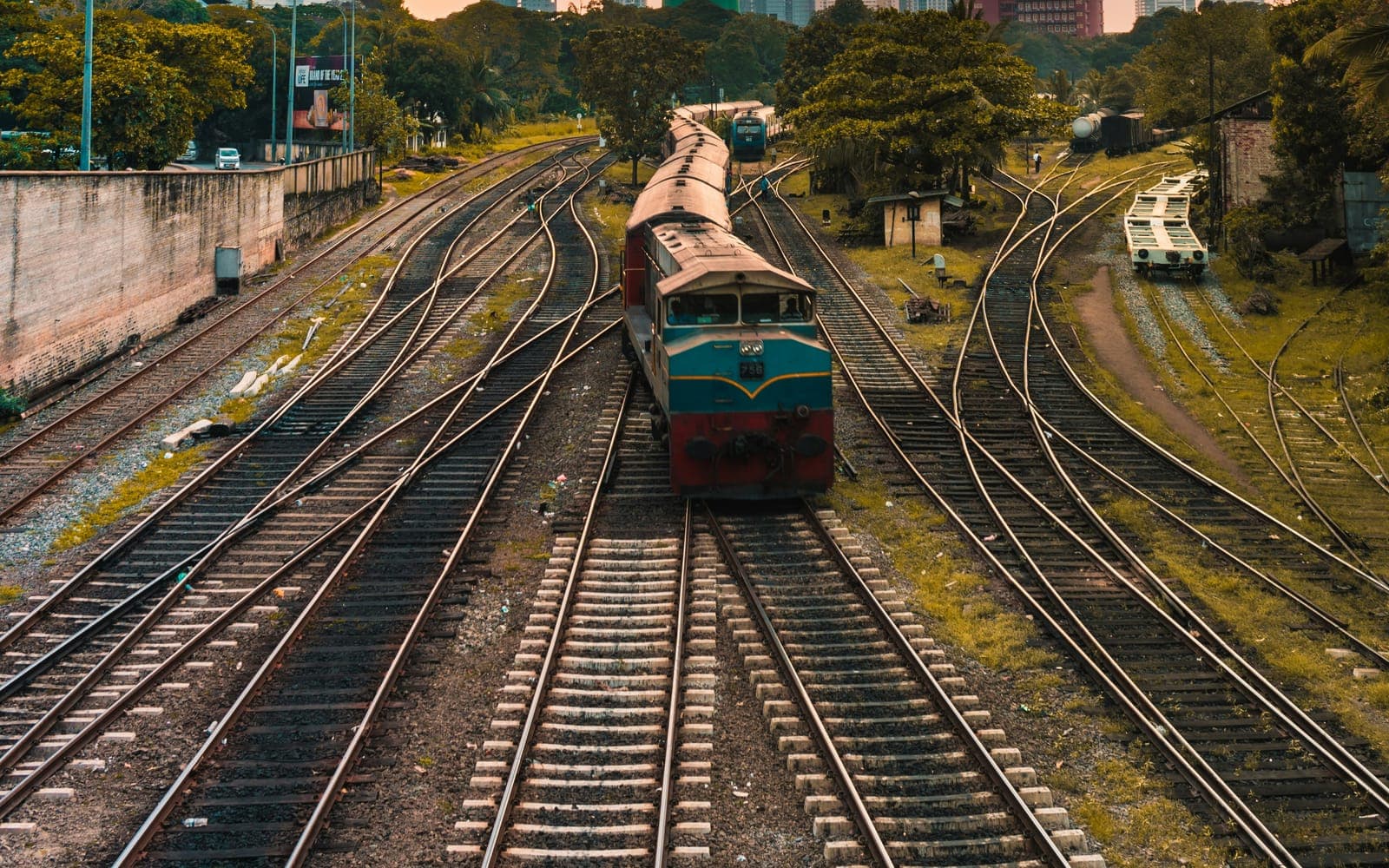
The railway is a British-era network built to move tea and coconut to the ports, and it is now the most enjoyable way to travel here.
The lines that matter:
- The hill line — Colombo–Kandy–Nanu Oya (for Nuwara Eliya)–Ella–Badulla. The Kandy to Ella stretch is the famous one: tea estates, tunnels, ravines and the Nine Arch Bridge at Demodara. Six to seven hours and worth every one.
- The coastal line — Colombo south through Kalutara, Bentota, Hikkaduwa, Galle and on to Matara. It runs so close to the sea in places that spray reaches the windows.
- The northern line to Jaffna, rebuilt after the war, which makes the far north an easy overnight trip.
Classes:
- Third class — unreserved, wooden or basic seats, crowded, cheap, and sociable. Fine for short hops.
- Second class — reserved or unreserved. Reserved is the sweet spot on long journeys.
- First class — either air-conditioned with sealed windows, or an observation saloon. The sealed windows are a real drawback on the hill line, where half the pleasure is the open doorway and the air.
Booking: reserved seats on the hill line sell out days ahead in high season. Unreserved third class is always available — you simply may not get a seat. Do not hang out of the doors; people are injured doing it every year.
Buses
Buses go absolutely everywhere, leave constantly, and cost very little.
- Red buses are the state operator (SLTB). Slower, cheaper, more stops.
- Private buses are faster, more aggressively driven, and often blaring music.
- Air-conditioned intercity coaches run the main routes and are worth the small premium on long journeys.
There are rarely published timetables for local routes; you go to the bus stand and ask, and something will be leaving shortly. Conductors collect fares on board. Buses do not always come to a complete stop — be ready.
Tuk-tuks
The three-wheeler is the taxi of Sri Lanka and covers everything the train and bus do not.
- In Colombo and larger towns, many are metered. Insist on the meter.
- Elsewhere, agree the fare before you get in. Ask your guesthouse what a fair price is for the trip.
- Ride-hailing apps operate in Colombo and other cities and remove the negotiation entirely — usually the cheapest and least stressful option.
- For a full day of sightseeing, hiring a tuk-tuk and driver by the day is reasonable value and much cheaper than a car.
Driving yourself
- Scooters and motorbikes are cheap to hire and give real freedom, especially around Ella, the south coast and Arugam Bay.
- You need an international driving permit plus a Sri Lankan recognition permit — an extra step that is straightforward to arrange but genuinely enforced at police checkpoints. Riding without it is also likely to void your travel insurance.
- Helmets are compulsory and the roads demand real attention: buses overtake into oncoming traffic as a matter of routine.
- Tuk-tuk hire for self-driving is increasingly popular and is a slower, more forgiving way to do the same thing.
Domestic flights and boats
Domestic air services are limited and expensive relative to everything else, and given the distances involved they rarely make sense. There is no significant passenger ferry network.
What it all means for planning
The single most common mistake is moving too fast. Distances look tiny on the map, but hill roads are slow, and a 150km journey can take five hours. Two or three nights per stop beats one, and the train journeys are experiences in themselves rather than dead time between places — plan them as activities, not transfers.