
travel · 3 min read
A Traveller's Guide to Colombo
Most itineraries treat Colombo as a night either side of the airport. Here's what the capital actually has, neighbourhood by neighbourhood, if you give it a day or two.
· Colombo
Colombo rarely gets more than a night at either end of a Sri Lankan itinerary, and it's easy to see why on a first pass — it's hot, traffic-heavy, and none of the island's headline sights (the ancient cities, the tea hills, the beaches) are here. What it does have is everything that doesn't fit on a beach or a rock fortress: museums, a functioning colonial-era streetscape, the country's best restaurant scene, and a sense of what an ordinary Sri Lankan working week looks like.
Fort and Pettah — the old commercial core
Fort is the former colonial administrative quarter — Dutch and British-era buildings, the clock tower, and the old Cargills and Grand Oriental Hotel frontages, much of it restored in the last two decades after decades of security cordons during the civil war years. Pettah, just inland, is the opposite register entirely: a dense, specialised bazaar where individual streets deal in one trade each — hardware on one, textiles on the next, spices on another. The Jami Ul-Alfar Mosque, the red-and-white striped "Red Mosque" dated to the early 20th century, is the district's landmark and one of the most photographed buildings in the city.
Galle Face and the seafront
Galle Face Green is Colombo's public seafront — a long open lawn on the Indian Ocean where the city comes in the evening to eat street food, fly kites and watch the sunset. It sits between the old Fort district and the modern high-rise skyline that has grown up south of it, which makes it a useful hinge point for getting your bearings.
Cinnamon Gardens and the museums
Cinnamon Gardens (Colombo 07) is the leafy, planned residential quarter laid out in the colonial period — wide streets, embassies, and most of the city's cultural institutions. The National Museum holds the best single collection of Kandyan-era regalia and Buddhist art on the island, and the neighbouring Viharamahadevi Park is the city's main green space, named for the mother of a 2nd-century-BCE king.
Neighbourhood character elsewhere
- Slave Island / Kompanna Veediya, once a colonial garrison and slave-holding quarter under the Portuguese and Dutch, is now a mixed, transitional district that's changing fast as the Colombo waterfront redevelops around it.
- Wellawatte is Colombo's Tamil quarter, known for South Indian food and Hindu temples.
- Mount Lavinia, at the southern edge, keeps its own beach and a former governor's residence turned hotel.
Getting around
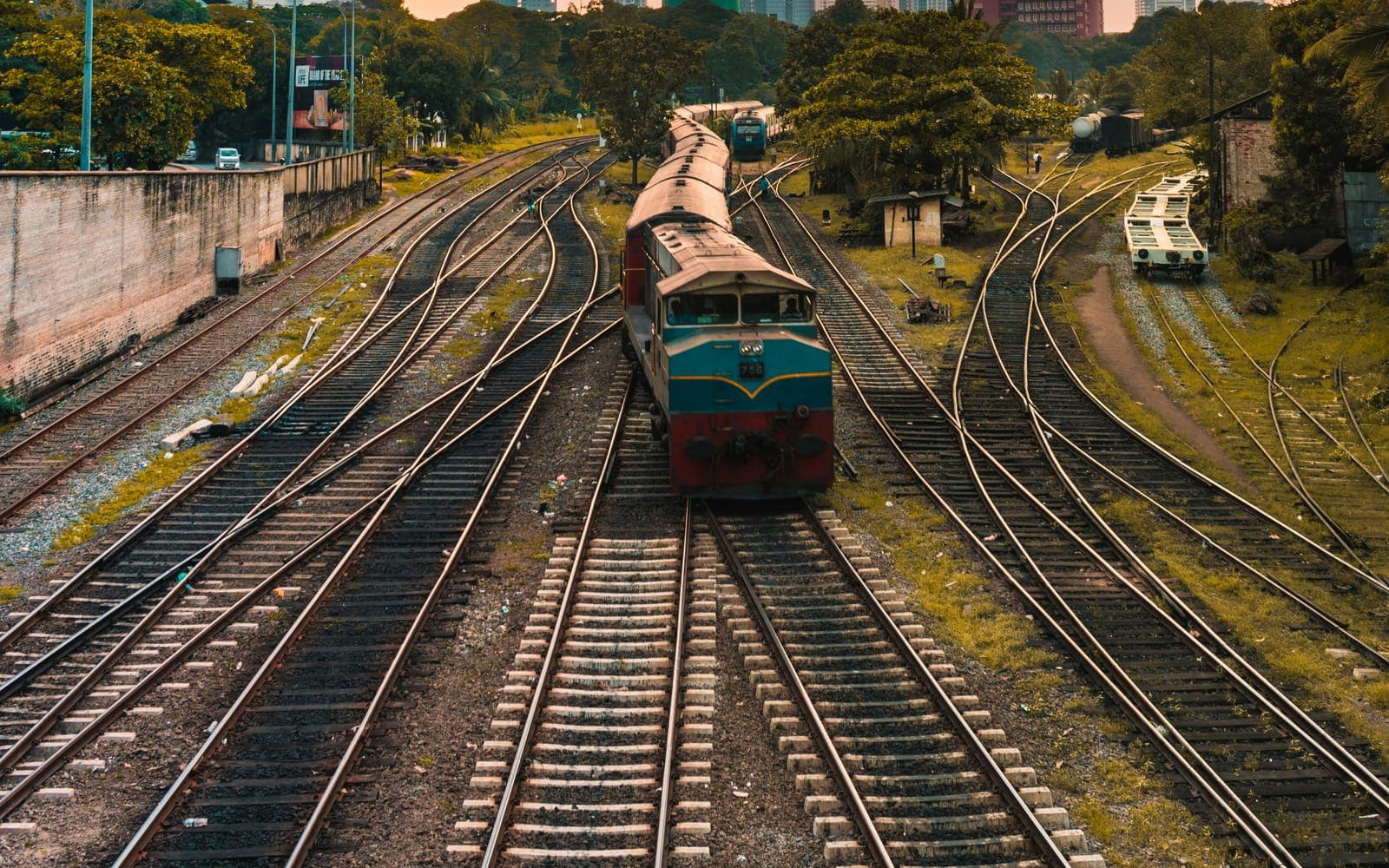
Colombo's traffic is genuinely bad at peak hours, and the city is too spread out to walk between districts. Tuk-tuks and ride-hailing apps are the practical default; metered tuk-tuks are common in the centre, and it's worth insisting on the meter or agreeing a fare first. The suburban rail line running along the coast is a slow but useful way to move between Fort, Mount Lavinia and the southern suburbs without the traffic.
Why give it the time
A capital city tells you things a resort or a ruin can't: what people actually eat on a weekday, how a former colony's architecture gets reused rather than preserved as a museum piece, and where the country's contemporary art and food scenes are heading. One full day covers Fort, Pettah and Galle Face; two lets you add Cinnamon Gardens and a proper sit-down dinner instead of an airport-adjacent one.