

travel · 2 min read
The Best Time to Visit Sri Lanka: Two Monsoons, Explained
Sri Lanka has no single dry season. Two opposing monsoons hit opposite coasts at opposite times — which means somewhere on the island is always in season.
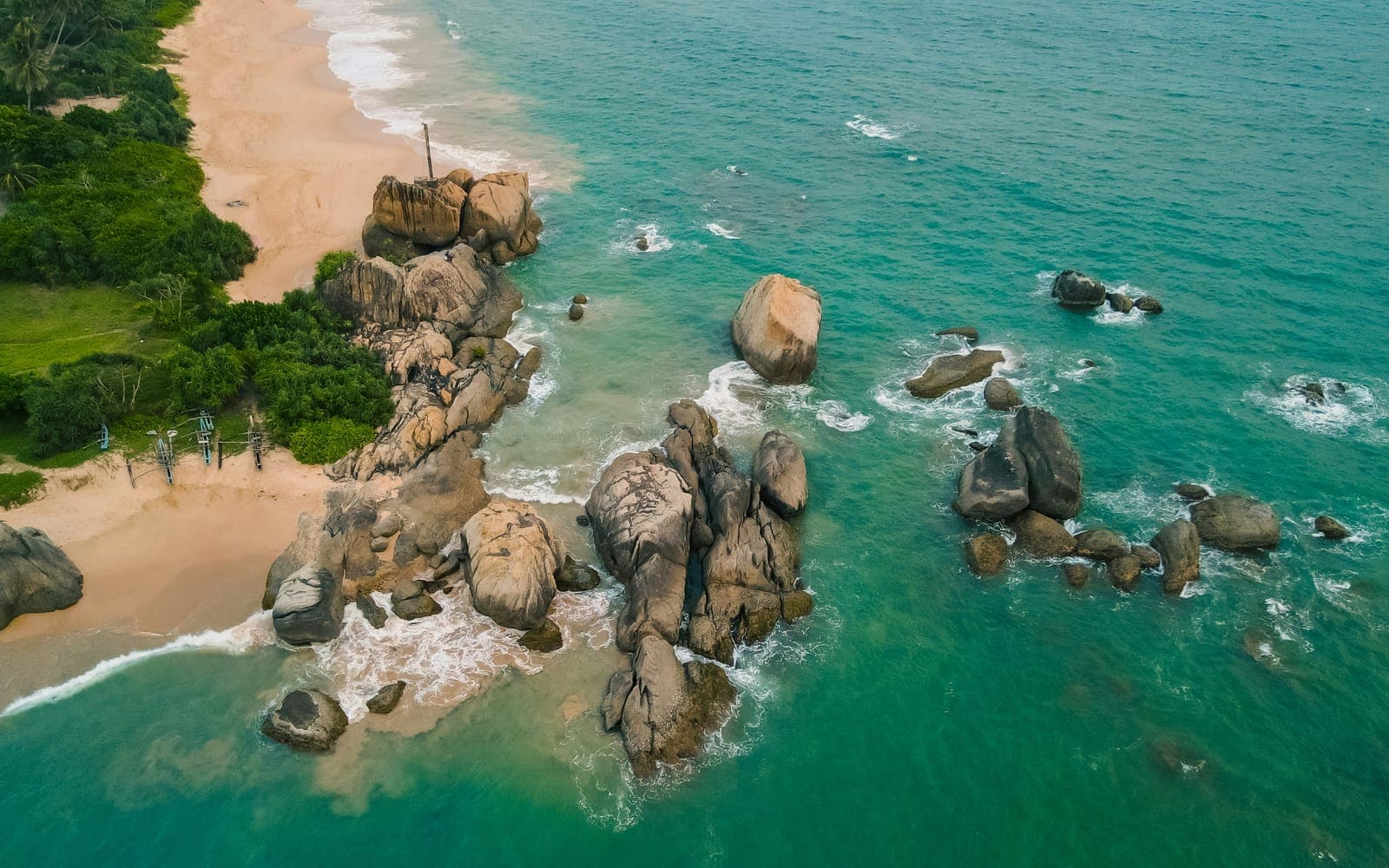
· Galle
The single most useful thing to understand about travelling in Sri Lanka: there is no nationwide dry season. The island gets two monsoons from opposite directions, and they hit opposite coasts at opposite times of year.
This is good news. It means there is no bad time to visit — only a wrong place at a given time.
The two monsoons
Yala (southwest) monsoon — May to September Affects the south and west coasts and the hill country. Galle, Mirissa, Bentota and Colombo see their wettest months.
Maha (northeast) monsoon — October to January Affects the north and east. Trincomalee, Arugam Bay and Jaffna get their rain here.
So where do I go, and when?
| Months | Go here | Avoid |
|---|---|---|
| Dec – Mar | South & west coasts, hill country | North & east |
| May – Sep | East coast, Arugam Bay, Trincomalee, Jaffna | South & west coasts |
| Apr, Oct – Nov | Inter-monsoon — variable everywhere | — |
The cultural triangle (Sigiriya, Polonnaruwa, Anuradhapura) sits in the dry zone and is workable year-round, though April and May are punishingly hot.
Season by activity
Surfing — South coast November to April; east coast May to September. The seasons invert cleanly.
Whale watching — Mirissa is best November to April. Trincomalee runs May to September.
Safari — Yala and Udawalawe are best in the dry months, February to July, when animals concentrate around shrinking water. Yala Block 1 usually closes for September.
Hiking — Adam's Peak season runs December to May. Horton Plains is clearest early morning, December to March.
When to actually book
Peak: mid-December to mid-January, and August. Prices roughly double and the good villas go months ahead.
Best value: the shoulder months — late April to early June, and September to early November. Prices drop 30–50% and the rain is often a heavy afternoon burst rather than a washed-out day.